


Article: Perioral dermatitis: How I calmed mine in 3 simple steps
Perioral dermatitis: How I calmed mine in 3 simple steps
Perioral dermatitis — or (not so) lovingly known as PD. If you’ve landed here after desperately Googling “what is perioral dermatitis?” or “how do I get rid of this rash around my mouth?”, I've been there too.
Perioral dermatitis can be sore, frustrating and seriously annoying to deal with.
It usually shows up as a rash around the mouth (and sometimes the nose or eyes too), causing dry, flaky skin, redness, inflamed bumps and a burning or stinging feeling. Cute? Not exactly.
And to make things even more confusing, perioral dermatitis is often mistaken for acne, meaning a lot of people accidentally use products that can make it angrier. A real lose-lose situation.
I’ve dealt with perioral dermatitis myself, so trust me when I say: you’re not alone.
What is perioral dermatitis?
Perioral dermatitis is a skin condition that most commonly appears around the mouth, but can also show up around the nose and eyes.
Common perioral dermatitis symptoms include:
-
Redness around the mouth
-
Small inflamed bumps
-
Dry, flaky or scaly skin
-
Burning or stinging
-
Skin that feels irritated, sore or tight
For many people, perioral dermatitis flare-ups seem to come out of nowhere. One day your skin is fine, the next? Angry.
What causes perioral dermatitis?
The frustrating answer: it depends.
There are lots of potential perioral dermatitis triggers, and in my experience, it’s often a combination of factors rather than one single thing. Some common culprits include:
Toothpaste: For some people, potent toothpaste (especially formulas with strong flavours or irritating ingredients) can aggravate the skin around the mouth. This was a big one for me.
Skincare: If your skin barrier is already struggling, overly active skincare can sometimes make perioral dermatitis worse. Think potent actives, fragrances, harsh exfoliants or routines with way too many steps. I founded Yours Only because I couldn’t find anything to help calm my hypersensitive skin.
Steroid creams: According to the Australasian College of Dermatologists*, long-term use of steroid creams on the face may contribute to perioral dermatitis in some people.
Makeup: Expired makeup, fragrance, irritating formulas or products your skin simply doesn’t vibe with can sometimes trigger flare-ups too.
Other factors: Hormones, bacteria, candida, stress and environmental triggers can all potentially play a role. Like I said: frustrating.
My perioral dermatitis story
Back in peak 2020 lockdown, I started getting really cracked, sore lips, and the skin around my mouth became itchy, inflamed and painful.
At the time, I was only using CLEAN and COAT in my skincare routine, so I knew those weren’t the issue.
After a lot of trial and error, I realised a few other things might have been aggravating my skin:
-
My toothpaste was way too potent for my sensitivities
-
My lip balm was full of ingredients my skin wasn’t loving
-
Wearing a face mask regularly was irritating the area further

Honestly, I couldn’t find a lip balm that felt genuinely allergy-friendly or gentle enough for hypersensitive skin.
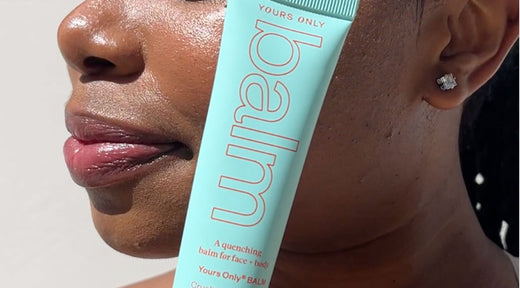
So I created BALM.
A lip and body balm designed for lips, cracks and super dry areas, made without common irritants that can sometimes aggravate sensitive skin even further. I wanted something simple, nourishing and gentle enough for skin that was already going through it.

My simple routine for managing perioral dermatitis
When my skin was freaking out, complicated routines were the last thing it needed.
Here’s the simple routine I used to help support my skin barrier:
Step 1: Wash with lukewarm water and a gentle cleanser
I washed the area with CLEAN and lukewarm water.
And a very important PSA: hot water and reactive skin are rarely best friends. If your skin feels angry, try switching to lukewarm water instead. This made a bigger difference for me than I expected.
Step 2: Keep skin nourished
I’d wait around 10 minutes, then apply COAT to help nourish and support my skin barrier.
Step 3: Protect dry areas
I’d apply BALM to my lips, cracks and any super dry areas needing extra support. Simple. No ten-step routine required.
Can skincare make perioral dermatitis worse?
Sometimes, yes.
If your skin barrier is compromised, too many actives, fragrance-heavy products or harsh skincare can sometimes aggravate already reactive skin.
I’m a big believer in keeping things simple when your skin is going through it.
Less irritation. More nourishment. Products like ours.
Real stories from our community
Jessica tried (literally) everything
Jessica tried around 20 different skincare ranges before stumbling across Yours Only. That’s a lot of time and money spent on products that didn’t work for her skin.
After three weeks using CLEAN, COAT and BALM, she finally felt like her skin was heading in the right direction.

Saskia broke up with hot water.
Saskia’s perioral dermatitis had her confused. While the Yours Only range felt great on her skin, she wasn’t seeing the results she hoped for.
After chatting with me, she realised she was washing her face with hot water. She switched to lukewarm instead and her skin finally started saying thank you.

Keely researched. Then researched some more.
Keely described this routine as “magic” after seeing changes in just 1.5 weeks. (Although I wish I had an actual magic wand — sadly, I don’t.)
After doing heaps of research into skincare for perioral dermatitis, she started with the Yours Only Mini Bundle to see how her skin responded.
Safe to say, she was pretty happy with the result.

You’re not alone
Perioral dermatitis can feel isolating, frustrating and honestly just exhausting.
But if you’re dealing with sore, flaky skin around your mouth right now, please know you’re not the only one navigating it.
I know firsthand how overwhelming reactive skin can feel. Sometimes, the biggest difference comes from simplifying things, identifying triggers, and finding products your skin actually tolerates.
Source: Australasian College of Dermatologists